The π-shaped project manager
The role of the project manager will change dramatically in 2026. Lynn, an Agile project manager coach at Equalminds, is witnessing this evolution firsthand. “You can’t lead a project by focusing solely on planning and risks,” she says. “You have to understand the business, understand the technology, and involve people in the change.”
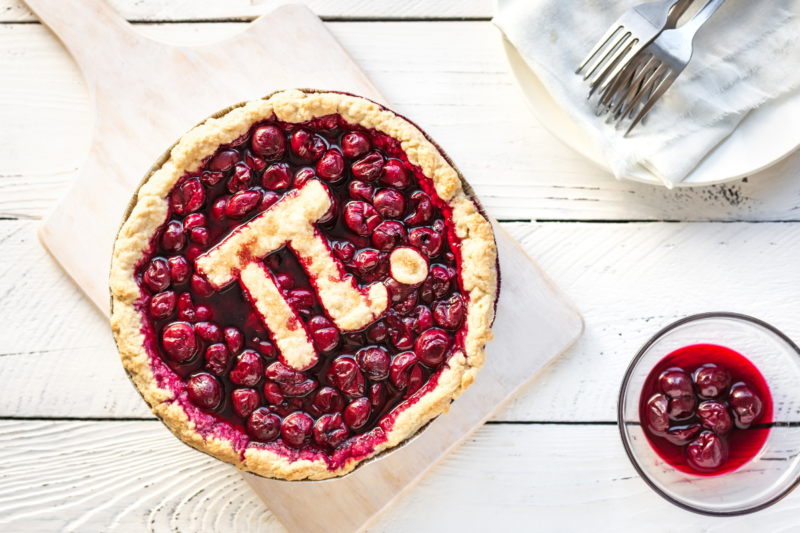
That’s why project managers at Equalminds are increasingly shifting to a π-shaped profile: they combine a solid foundation in project management with two or more areas of expertise. These two “legs” of the π (Pi) make them extra powerful, flexible, and valuable. In this way, the project manager at Equalminds becomes not only an executor but also a strategic sparring partner, enabling the company to capitalize on this broader trend by connecting teams, processes, and strategy.
Curiosity as a driving force
Many careers begin with a single, clear area of expertise, developed during an academic program. “You always start your career with an I-shaped profile: with one area of expertise. Then I consciously developed a T-profile: broad general knowledge with one in-depth expertise. Until, along the way, a second area of expertise emerged.” That second branch doesn’t develop automatically.
How does it then? Curiosity is key, if you ask Lynn! Explore, try new things, and learn from others. “I was inspired by the coaching I provide privately, the analyses in numerous projects, and the Agile working methodology,” says Lynn. Those around her confirm this. For example, she is often described by friends and colleagues as “the glue that holds a team together”: someone who makes the pieces of the puzzle fall into place.
Lynn knows from experience that expertise can be a blinding force. How does a technician solve team problems? Or how does an expert handle budget overruns? That’s precisely where she makes the difference. “I work with specialists every day, each of whom excels in their field. But the mayonnaise around all those specializations? I make that.” Lynn specializes in methodologies (such as Agile, Waterfall, Scaled Agile, and Obeya) on the one hand, and tooling on the other. She believes it’s essential to understand how projects are organized and which working methods help teams collaborate more efficiently. This is how she connects people, processes, and tools into a unified whole.
From project manager to sparring partner
However, a π-profile also brings challenges. How do you explain exactly what you do when your role is constantly evolving? And how do you ensure you don’t become a “single point of failure” because everyone knows where to find you? Lynn recognizes this risk. “Initially, I take on a lot, but then I try to train others so they can take over. That’s my job as a coach.”
This coaching role is important: a π professional isn’t, and doesn’t want to be, indispensable, but rather empower others. The core remains teamwork: sharing expertise, transferring knowledge, and growing together.
A concrete example? Lynn’s project recently began in a classic context: a clear scope, waterfall approach. Until the system suddenly evolved from a project-based to a product-based approach. The question no longer became “what do we add,” but “what do we need as a minimum to keep the product running?” Because she’s familiar with both worlds—Waterfall and Agile—Lynn was able to guide the transition. She evolved from PM to Agile coach, managed teams, adapted working methods, and helped management make bold choices. “That’s precisely where the added value lies: thinking broadly, providing realistic advice, and simultaneously understanding the practical side of things. This approach is appreciated.”
A future-oriented culture with the π-shaped project manager
Why does Equalminds offer noticeably more π profiles within consultancy? The answer lies in their culture. There’s constant cross-pollination between project managers and analysts: they learn from each other during Agile Cafés, office days, and informal knowledge sessions. Moreover, there’s a strong sense of community. Project managers aren’t alone in their assignments; they learn from each other. This way, they discover new tools, regularly share the same challenges, and grow together.
Moreover, Equalminds strongly believes that future project managers must be more π-shaped than ever. AI plays a major role in this. While AI can automate parts of our work, the human, coaching, and connecting aspects are becoming more important than ever. Lynn sees this as a logical evolution: deepening expertise where AI cannot (yet) reach, and guiding people where technology lacks empathy.
What’s next?
Becoming π-shaped isn’t a checklist, but an attitude: asking questions, connecting, and brainstorming. You can find more inspiration in David Epstein’s book “Why Generalists Get Further,” as well as Spotify’s podcast “Tournee generaliste.”
The modern project manager is a coach, a catalyst, and above all: a sparring partner who creates impact.
Her ultimate tip? It’s surprisingly down-to-earth: stay curious. Take courses, read, ask questions, attend thought leaders and webinars, and discover what you truly love doing. Lynn likes to compare this to the Japanese model of ikigai: do something you enjoy, what you’re good at, what the world needs, and what you can get paid for. “I was already over thirty when the puzzle fell into place for me. Think broader and shape your job yourself, tailored to your client’s needs. Clients are often specialists in their field, but less so in the toolbox we bring with us as project managers. By taking on your role as a π-shaped sparring partner, you achieve so much more,” Lynn concludes.